


La longévité commence
dans le cerveau
On pense souvent à prendre soin de son cœur, de sa peau ou de son alimentation.
Mais rarement de son cerveau. Pourtant, il commence à vieillir dès 30 ans.
En créant brainologist, nous avons voulu changer cela.
La longévité commence
dans le cerveau


On pense souvent à prendre soin de son cœur, de sa peau ou de son alimentation.
Mais rarement de son cerveau.
Pourtant, il commence à vieillir dès 30 ans. En créant brainologist, nous avons voulu changer cela.

À partir de 30 ans, notre cerveau perd en plasticité : le nombre de connexions neuronales diminue, la mémoire de travail ralentit, la concentration devient plus fragile.
Etude

À la naissance, notre cerveau contient environ 100 milliards de neurones. Ce chiffre ne cesse ensuite de diminuer avec le temps.

Après 40 ans : la mémoire et la concentration peuvent chuter de près de 15%
Etude

Le cerveau est notre organe le plus exigeant : il ne pèse que 2% du corps,
mais consomme près de 20% de notre énergie.
Les neurosciences sont claires : le vieillissement cérébral n’est pas une fatalité.
Grâce à la neuroplasticité, nos neurones continuent de communiquer et se réarranger tout au long de notre vie.
Mieux vivre aujourd'hui
pour bien vieillir demain
Chaque choix du quotidien influence notre cerveau :
+ la qualité de notre sommeil
+ la gestion du stress
+ les aliments que nous mangeons
+ la pratique sportive
+ la curiosité que nous entretenons
+ les liens que nous cultivons.
En agissant sur ces leviers, nous ne faisons pas qu’améliorer notre bien-être immédiat. Nous investissons dans notre longévité cognitive : mémoire, énergie, équilibre émotionnel, apprentissage.
Mieux vivre aujourd'hui
pour bien vieillir demain
Chaque choix du quotidien influence notre cerveau :
+ la qualité de notre sommeil
+ la gestion du stress
+ les aliments que nous mangeons
+ la pratique sportive
+ la curiosité que nous entretenons
+ les liens que nous cultivons.
En agissant sur ces leviers, nous ne faisons pas qu’améliorer notre bien-être immédiat. Nous investissons dans notre longévité cognitive : mémoire, énergie, équilibre émotionnel, apprentissage.

SOMMEIL

STRESS

NUTRITION

SPORT

CURIOSITÉ

LIEN SOCIAL
La science derrière brainologist
Nos formules sont imaginées par Alison, Docteure en Pharmacie et co-fondatrice de brainologist, en collaboration avec un comité scientifique.
Chaque actif est choisi sur la base d’études cliniques publiées et les dosages utilisés sont alignés avec les seuils d’efficacité démontrés.
C’est cette rigueur qui permet à nos formules d’agir à la fois sur la performance immédiate et la prévention à long terme.

La longévité cognitive n’est pas une promesse lointaine, c’est une pratique quotidienne.
+ Formulées par une docteure en pharmacie
+ Fabriquées en France
+ Pensées pour le court et le long terme

Nous avons transformé la recherche scientifique en routines simples et efficaces : trois formules complémentaires, conçues pour soutenir votre cerveau au quotidien.
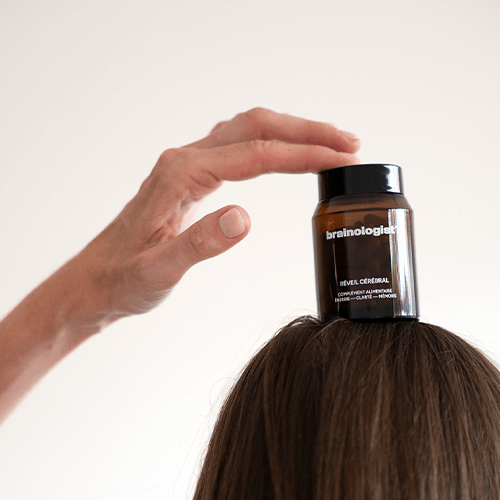
Réveil cérébral : pour retrouver énergie et clarté mentale.
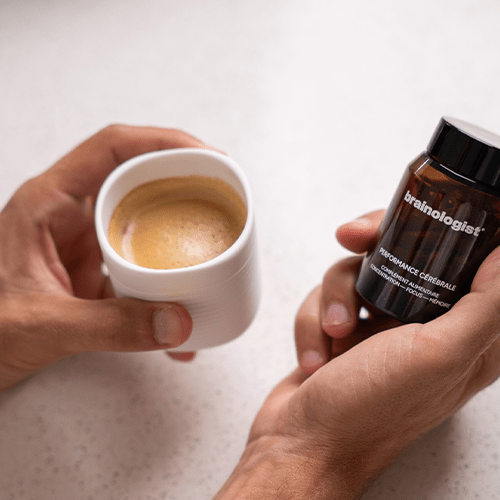
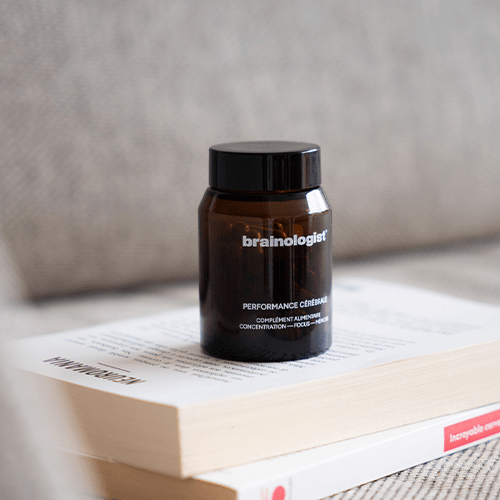
Performance cérébrale : pour renforcer mémoire et concentration.
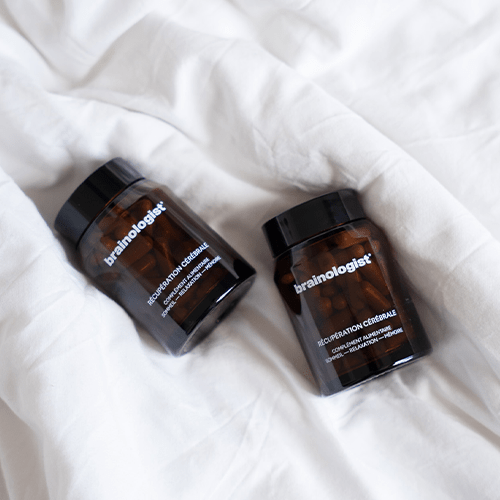
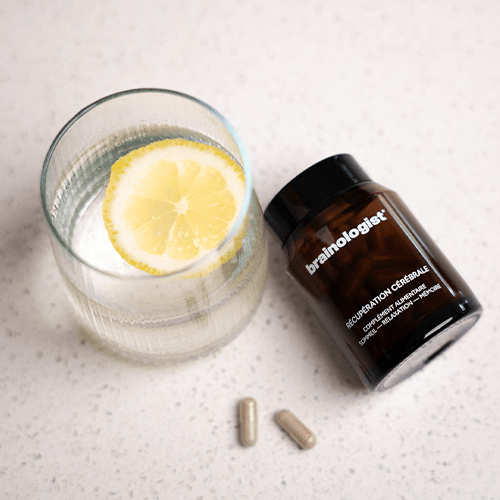
Récupération cérébrale : pour favoriser un sommeil profond et réparateur.

Pour aller plus loin
dans la recherche scientifique
MÉMOIRE & APPRENTISSAGE
Études sur la mémoire et les fonctions cognitives supérieures :
Gregory, J., et al. (2021). Neuroprotective Herbs for the Management of Alzheimer's Disease.Biomolecules.
Choudhary, D., et al. (2017). Efficacy and Safety of Ashwagandha (Withania somnifera (L.) Dunal) Root Extract in Improving Memory and Cognitive Functions.J Diet Suppl.
Dixit, H., et al. (2021). Molecular docking analysis of hyperphosphorylated tau protein with compounds derived from Bacopa monnieri and Withania somnifera.Bioinformation.
Sadhu, A., et al. (2014). Management of cognitive determinants in senile dementia of Alzheimer's type: therapeutic potential of a novel polyherbal drug product. Clin Drug Investig.
Aguiar, S., et al. (2013). Neuropharmacological review of the nootropic herb Bacopa monnieri.Rejuvenation Res.
Morgan, A., et al. (2010). Does Bacopa monnieri improve memory performance in older persons? Results of a randomized, placebo-controlled, double-blind trial. J Altern Complement Med.
Cox, K.H.M., et al. (2020). Further Evidence of Benefits to Mood and Working Memory from Lipidated Curcumin in Healthy Older People: A 12-Week, Double-Blind, Placebo-Controlled, Partial Replication Study.Nutrients.
Small, G.W., et al. (2018). Memory and Brain Amyloid and Tau Effects of a Bioavailable Form of Curcumin in Non-Demented Adults: A Double-Blind, Placebo-Controlled 18-Month Trial.Am J Geriatr Psychiatry.
Xu, Y., et al. (2006). Curcumin reverses the effects of chronic stress on behavior, the HPA axis, BDNF expression and phosphorylation of CREB.Brain Res.
Panossian, A., et al. (2009). Evidence-based efficacy of adaptogens in fatigue, and molecular mechanisms related to their stress-protective activity.Curr Clin Pharmacol.
Heo, J.H., et al. (2012). Heat-processed ginseng enhances the cognitive function in patients with moderately severe Alzheimer's disease.Nutr Neurosci.
Heo, J.H., et al. (2008). An open-label trial of Korean red ginseng as an adjuvant treatment for cognitive impairment in patients with Alzheimer's disease.Eur J Neurol.
Wesnes, K.A., et al. (2000). The memory enhancing effects of a Ginkgo biloba/Panax ginseng combination in healthy middle-aged volunteers.Psychopharmacology (Berl).
Matthews, D.G., et al. (2019). Centella Asiatica Improves Memory and Promotes Antioxidative Signaling in 5XFAD Mice.Antioxidants (Basel).
Boasquívis, P.F., et al. (2018). Guarana (Paullinia cupana) Extract Protects Caenorhabditis elegans Models for Alzheimer Disease and Huntington Disease through Activation of Antioxidant and Protein Degradation Pathways. Oxid Med Cell Longev.
Huang, X., et al. (2018). The Prenylflavonoid Xanthohumol Reduces Alzheimer-Like Changes and Modulates Multiple Pathogenic Molecular Pathways in the Neuro2a/APPswe Cell Model of AD.Front Pharmacol.
Ingale, S.P., et al. (2017). Effect of Standardized Extract of Passiflora incarnata Flower in Parkinson's and Alzheimer's Disease.Anc Sci Life.
Ma, G.P., et al. (2018). Rhodiola rosea L. Improves Learning and Memory Function: Preclinical Evidence and Possible Mechanisms.Front Pharmacol.
D'Onofrio, G., et al. (2021). Crocus Sativus L. (Saffron) in Alzheimer's Disease Treatment: Bioactive Effects on Cognitive Impairment.Curr Neuropharmacol.
Avgerinos, K.I., et al. (2020). Effects of saffron (Crocus sativus L.) on cognitive function. A systematic review of RCTs.Neurol Sci.
FOCUS & PERFORMANCE MENTALE
Études sur la vigilance, la concentration et la performance cognitive :
Mannino, G., et al. (2023). Biological Activity and Metabolomics of Griffonia simplicifolia Seeds Extracted with Different Methodologies.Antioxidants.
Malík, M., et al. (2023). Nootropic Herbs, Shrubs, and Trees as Potential Cognitive Enhancers.Plants.
Malík, M., et al. (2022). Nootropics as Cognitive Enhancers: Types, Dosage and Side Effects of Smart Drugs.Nutrients.
Ahles, S., et al. (2020). The Effect of Long-Term Aronia melanocarpa Extract Supplementation on Cognitive Performance, Mood, and Vascular Function: A Randomized Controlled Trial in Healthy, Middle-Aged Individuals.Nutrients.
Cox, K.H.M., et al. (2020). Further Evidence of Benefits to Mood and Working Memory from Lipidated Curcumin in Healthy Older People: A 12-Week, Double-Blind, Placebo-Controlled, Partial Replication Study.Nutrients.Banjari, I., et al. (2018). Forestalling the Epidemics of Parkinson's Disease Through Plant-Based Remedies.Front Nutr.Choudhary, D., et al. (2017). Efficacy and Safety of Ashwagandha (Withania somnifera (L.) Dunal) Root Extract in Improving Memory and Cognitive Functions.J Diet Suppl.Jamshidi, N., et al. (2017). The Clinical Efficacy and Safety of Tulsi in Humans: A Systematic Review of the Literature.Evid Based Complement Alternat Med.
Kumar, N., et al. (2016). Efficacy of Standardized Extract of Bacopa monnieri (Bacognize®) on Cognitive Functions of Medical Students: A Six-Week, Randomized Placebo-Controlled Trial.Evid Based Complement Alternat Med.
Guo, S.S., et al. (2016). Preservation of Cognitive Function by Lepidium meyenii (Maca) Is Associated with Improvement of Mitochondrial Activity and Upregulation of Autophagy-Related Proteins in Middle-Aged Mouse Cortex.Evid Based Complement Alternat Med.
Veasey, R.C., et al. (2015). The Effects of Supplementation with a Vitamin and Mineral Complex with Guaraná Prior to Fasted Exercise on Affect, Exertion, Cognitive Performance, and Substrate Metabolism: A Randomized Controlled Trial.Nutrients.
Cox, K.H., et al. (2015). Investigation of the effects of solid lipid curcumin on cognition and mood in a healthy older population.J Psychopharmacol.
Farokhnia, M., et al. (2014). Comparing the efficacy and safety of Crocus sativus L. with memantine in patients with moderate to severe Alzheimer's disease: a double-blind randomized clinical trial.Hum Psychopharmacol.
Kongkeaw, C., et al. (2014). Meta-analysis of randomized controlled trials on cognitive effects of Bacopa monnieri extract.J Ethnopharmacol.
Roalf, D.R., et al. (2014). Neuroimaging predictors of cognitive performance across a standardized neurocognitive battery.Neuropsychology.
Heo, J.H., et al. (2012). Heat-processed ginseng enhances the cognitive function in patients with moderately severe Alzheimer's disease.Nutr Neurosci.
Singh, N., et al. (2011). An overview on ashwagandha: a Rasayana (rejuvenator) of Ayurveda.Afr J Tradit Complement Altern Med.
Panossian, A., et al. (2010). Effects of Adaptogens on the Central Nervous System and the Molecular Mechanisms Associated with Their Stress-Protective Activity.Pharmaceuticals.
Kuo, J., et al. (2010). The effect of eight weeks of supplementation with Eleutherococcus senticosus on endurance capacity and metabolism in human.Chin J Physiol.
Gohil, K.J., et al. (2010). Pharmacological Review on Centella asiatica: A Potential Herbal Cure-all.Indian J Pharm Sci.
Aslanyan, G., et al. (2010). Double-blind, placebo-controlled, randomised study of single dose effects of ADAPT-232 on cognitive functions.Phytomedicine.
Akhondzadeh, S., et al. (2010). Saffron in the treatment of patients with mild to moderate Alzheimer's disease: a 16-week, randomized and placebo-controlled trial.J Clin Pharm Ther.
Panossian, A., et al. (2009). Evidence-based efficacy of adaptogens in fatigue, and molecular mechanisms related to their stress-protective activity.Curr Clin Pharmacol.
Kennedy, D.O., et al. (2008). Improved cognitive performance and mental fatigue following a multi-vitamin and mineral supplement with added guaraná (Paullinia cupana).Appetite.
Kennedy, D.O., et al. (2004). Improved cognitive performance in human volunteers following administration of guarana (Paullinia cupana) extract: comparison and interaction with Panax ginseng.Pharmacol Biochem Behav.
ÉQUILIBRE & RÉSILIENCE MENTALE
Études sur le stress, l’adaptation et la régulation émotionnelle :
Hong, R., et al. (2023). Lepidium meyenii Walp (Maca)-derived extracellular vesicles ameliorate depression by promoting 5-HT synthesis via the modulation of gut-brain axis.Imeta.
Zamoscik, V., et al. (2021). Tryptophan-enriched diet or 5-hydroxytryptophan supplementation given in a randomized controlled trial impacts social cognition on a neural and behavioral level.Sci Rep.
Lopresti, A.L., et al. (2019). An investigation into the stress-relieving and pharmacological actions of an ashwagandha (Withania somnifera) extract: A randomized, double-blind, placebo-controlled study.Medicine.
Salve, J., et al. (2019). Adaptogenic and Anxiolytic Effects of Ashwagandha Root Extract in Healthy Adults: A Double-blind, Randomized, Placebo-controlled Clinical Study.Cureus.
Vigliante, I., et al. (2019). Chemical Characterization and DNA Fingerprinting of Griffonia simplicifolia Baill.Molecules.
Dinel, A.L., et al. (2019). Reduction of acute mild stress corticosterone response and changes in stress-responsive gene expression in male Balb/c mice after repeated administration of a Rhodiola rosea L. root extract.Food Sci Nutr.Bangratz, M., et al. (2018). A preliminary assessment of a combination of rhodiola and saffron in the management of mild-moderate depression.Neuropsychiatr Dis and Treat.
Kasper, S., & Dienel, A. (2017). Multicenter, open-label, exploratory clinical trial with Rhodiola rosea extract in patients suffering from burnout symptoms.Neuropsychiatr Dis and Treat.
Kyrou, I., et al. (2017). Effects of a hops (Humulus lupulus L.) dry extract supplement on self-reported depression, anxiety and stress levels in apparently healthy young adults: a randomized, placebo-controlled, double-blind, crossover pilot study.Hormones.
Cropley, M., et al. (2015). The Effects of Rhodiola rosea L. Extract on Anxiety, Stress, Cognition and Other Mood Symptoms.Phytother Res.
Pratte, M.A., et al. (2014). An Alternative Treatment for Anxiety: A Systematic Review of Human Trial Results Reported for the Ayurvedic Herb Ashwagandha (Withania somnifera).The Journal of Alternative and Complementary Medicine.
Semalty, A., et al. (2012). Herbal Drugs in Chronic Fatigue Syndrome: An Overview.Swiss Journal of Integrative Medicine.
Chandrasekhar, K., et al. (2012). A Prospective, Randomized Double-Blind, Placebo-Controlled Study of Safety and Efficacy of a High-Concentration Full-Spectrum Extract of Ashwagandha Root in Reducing Stress and Anxiety in Adults.Indian J Psychol Med.
Singh, N., et al. (2011). An overview on ashwagandha: a Rasayana (rejuvenator) of Ayurveda.Afr J Tradit Complement Altern Med.
Carnevale, G., et al. (2011). Anxiolytic-like effect of Griffonia simplicifolia Baill. seed extract in rats.Phytomedicine.
Jana, U., et al. (2010). A clinical study on the management of generalized anxiety disorder with Centella asiatica.Nepal Med Coll J.
Movafegh, A., et al. (2008). Preoperative oral Passiflora incarnata reduces anxiety in ambulatory surgery patients: a double-blind, placebo-controlled study.Anesth Analg.
Young, S.N. (2007). How to increase serotonin in the human brain without drugs.J Psychiatry & Neurosci.
Xu, Y., et al. (2006). Curcumin reverses the effects of chronic stress on behavior, the HPA axis, BDNF expression and phosphorylation of CREB.Brain Res.
Wijeweera, P., et al. (2006). Evaluation of anxiolytic properties of Gotukola--(Centella asiatica) extracts and asiaticoside in rat behavioral models.Phytomedicine.
Andreatini, R., et al. (2002). Effect of valepotriates (valerian extract) in generalized anxiety disorder: a randomized placebo-controlled pilot study.Phytother Res.
Birdsall, T.C. (1998). 5-Hydroxytryptophan: a clinically-effective serotonin precursor.Altern Med Rev.
SOMMEIL & RÉGÉNÉRATION NEURONALE
Études sur la qualité du sommeil et la récupération cérébrale :
Chandra, S., et al. (2024). Standardized Extract of Valeriana officinalis Improves Overall Sleep Quality in Human Subjects with Sleep Complaints: A Randomized, Double-Blind, Placebo-Controlled, Clinical Study.Adv Ther.
Malík, M., & Tlustoš, P. (2023). Nootropic Herbs, Shrubs, and Trees as Potential Cognitive Enhancers.Plants.
Min, B., et al. (2023). Chemical compositions and sleep-promoting activities of hop (Humulus lupulus L.) varieties.J Food Sci.
Poza, J.J., et al. (2022). Melatonin in sleep disorders.Neurologia.
Abdellah, S.A., et al. (2019). A combination of Eschscholtzia californica Cham. and Valeriana officinalis L. extracts for adjustment insomnia: A prospective observational study.J Trad and Complement Med.
Zisapel, N. (2018). New perspectives on the role of melatonin in human sleep, circadian rhythms and their regulation.Br J of Pharmacol.
Guerrero, F.A., & Medina, G.M. (2017). Effect of a medicinal plant (Passiflora incarnata L) on sleep.Sleep Sci.
Kim, M., et al. (2017). Role Identification of Passiflora Incarnata Linnaeus: A Mini Review. J Menopausal Med.
Wang, S., et al. (2016). Hop (Humulus lupulus L.) Extract and 6-Prenylnaringenin Induce P450 1A1 Catalyzed Estrogen 2-Hydroxylation. Chem Res Toxicol.
Ngan, A., & Conduit, R. (2011). A double-blind, placebo-controlled investigation of the effects of Passiflora incarnata (passionflower) herbal tea on subjective sleep quality.Phytother Res.
Fernández-San-Martín, M.I., et al. (2010). Effectiveness of Valerian on insomnia: a meta-analysis of randomized placebo-controlled trials.Sleep Med.
Zisapel, N. (2010). Melatonin and sleep.The Open Neuroendocrinol J.
Pandi-Perumal, S.R., et al. (2006). Melatonin: Nature's most versatile biological signal? FEBS J.
Bent, S., et al. (2006). Valerian for sleep: a systematic review and meta-analysis.Am J Med.
Arendt, J. (2005). Melatonin: characteristics, concerns, and prospects.J Biol Rhythms.
Morin, C.M., et al. (2005). Valerian-hops combination and diphenhydramine for treating insomnia: a randomized placebo-controlled clinical trial.Sleep.
Stough, C., et al. (2001). The chronic effects of an extract of Bacopa monniera (Brahmi) on cognitive function in healthy human subjects.Psychopharmacology.
Zhdanova, I.V., et al. (1997). Melatonin: a sleep-promoting hormone.Sleep.
SANTÉ COGNITIVE
Études sur le vieillissement cérébral et la plasticité neuronale :
Hamedani, S.G., et al. (2024). Therapeutic effects of saffron and its components on neurodegenerative diseases.Heliyon.
Wróbel-Biedrawa, D., et al. (2014). Anti-Neuroinflammatory Effects of Adaptogens: A Mini-Review.Molecules.
Pilipović, K., et al. (2023). Plant-Based Antioxidants for Prevention and Treatment of Neurodegenerative Diseases: Phytotherapeutic Potential of Laurus nobilis, Aronia melanocarpa, and Celastrol.Antioxidants (Basel).
Kulkarni, R., et al. (2023). Neuroprotective effect of herbal extracts inhibiting soluble epoxide hydrolase (sEH) and cyclooxygenase (COX) against chemotherapy-induced cognitive impairment in mice.Biochem Biophys Res Commun.
Fujimori, H., et al. (2022). The protective effect of Centella asiatica and its constituent, araliadiol on neuronal cell damage and cognitive impairment.J Pharmacol Sci.
Huang, Y.H., et al. (2022). Memory enhancement effect of saponins from Eleutherococcus senticosus leaves and blood-brain barrier-permeated saponins profiling using a pseudotargeted monitoring strategy.Food Funct.
Wauquier, F., et al. (2022). Circulating Human Serum Metabolites Derived from the Intake of a Saffron Extract (Safr'InsideTM) Protect Neurons from Oxidative Stress: Consideration for Depressive Disorders.Nutrients.
Dominguez, L.J., et al. (2021). Nutrition, Physical Activity, and Other Lifestyle Factors in the Prevention of Cognitive Decline and Dementia.Nutrients.
Jurendić, T., et al. (2021). Aronia melanocarpa Products and By-Products for Health and Nutrition: A Review.Antioxidants (Basel).
Dixit, H., et al. (2021). Molecular docking analysis of hyperphosphorylated tau protein with compounds derived from Bacopa monnieri and Withania somnifera.Bioinformation.
Bian, Y., et al. (2020). Neuroprotective Potency of Saffron Against Neuropsychiatric Diseases, Neurodegenerative Diseases, and Other Brain Disorders: From Bench to Bedside.Front Pharmacol.
Pu, W.L., et al. (2020). Anti-inflammatory effects of Rhodiola rosea L.: A review.Biomed Pharmacother.
Liang, J.H., et al. (2020). Contributions of Modifiable Risk Factors to Dementia Incidence: A Bayesian Network Analysis.J Am Med Dir Assoc.
Zhang, J., et al. (2019). Curcumin inhibits LPS-induced neuroinflammation by promoting microglial M2 polarization via TREM2/ TLR4/ NF-κB pathways in BV2 cells.Mol Immunol.
Yu, Y., et al. (2018). Anti-inflammatory Effects of Curcumin in Microglial Cells.Front Pharmacol.
Kuszewski, J.C., et al. (2018). Can Curcumin Counteract Cognitive Decline? Clinical Trial Evidence and Rationale for Combining ω-3 Fatty Acids with Curcumin.Adv Nutr.
Small, G.W., et al. (2018). Memory and Brain Amyloid and Tau Effects of a Bioavailable Form of Curcumin in Non-Demented Adults: A Double-Blind, Placebo-Controlled 18-Month Trial.Am J Geriatr Psychiatry.
Sikandan, A., et al. (2018). Ashwagandha root extract exerts anti‑inflammatory effects in HaCaT cells by inhibiting the MAPK/NF‑κB pathways and by regulating cytokines. Int J Mol Med.
Gray, N.E., et al. (2018). Centella asiatica - Phytochemistry and mechanisms of neuroprotection and cognitive enhancement.Phytochem Rev.
Wennberg, A.M.V., et al. (2017). Sleep Disturbance, Cognitive Decline, and Dementia: A Review.Semin Neurol.
Cole, J.H., et al. (2017). Predicting brain age with deep learning from raw imaging data results in a reliable and heritable biomarker.Neuroimage.
Harada, C.N., et al. (2013). Normal cognitive aging.Clin Geriatr Med.
Singh-Manoux, A., et al. (2012). Timing of onset of cognitive decline: results from Whitehall II prospective cohort study.BMJ.
Salthouse, T.A., (2009). When does age-related cognitive decline begin?Neurobiol Aging.
Ng, T.P., et al. (2006). Curry consumption and cognitive function in the elderly.Am J Epidemiol.
Dietz, B.M., et al. (2005). Xanthohumol isolated from Humulus lupulus Inhibits menadione-induced DNA damage through induction of quinone reductase.Chem Res Toxicol.


